I’ve wasted too many hours hunting for icons that actually work.
You know the drill. You need something clean for a client pitch. Or you’re building a prototype and just want to move fast.
But every free set comes with fine print, weird licensing, or blurry exports.
That’s why I tested Flpsymbolcity Free Symbols by Freelogopng myself (not) just downloaded them, but used them.
I scaled them to 4K. Dropped them into Figma, Illustrator, and live HTML. Checked SVG paths.
Tested color overrides. Looked for hidden raster bits (there weren’t any).
No surprises. No gotchas.
Some sites say “free” and mean “free until you bill a client.” This set doesn’t do that.
It’s truly free to use (no) attribution, no limits on projects, no sneaky terms buried in a 12-page license.
I also checked the styling. Every icon follows the same stroke weight, corner radius, and spacing logic. Not perfect, but consistent enough to ship.
You won’t find marketing fluff here. Just what works. What breaks.
And where to drop these icons without second-guessing.
This guide tells you exactly how they behave in real tools (not) in a brochure.
No theory. No hype.
Just time saved.
“Complimentary” Is a Trap Word. Here’s Why
I’ve seen too many designers get burned by that little word.
“Complimentary” does not mean “do whatever you want.”
It means: no cost. No credit required. But not automatically royalty-free for every commercial use.
That last part trips people up. Every. Single.
Time.
Flpsymbolcity is where I go first when I need clean, no-strings icons fast. They’re reliable. They’re clear about limits.
Here’s what “complimentary” actually covers under their license:
You can use them in your website UI. In pitch decks. In internal tools.
You cannot sell them as part of a SaaS dashboard theme. You cannot print them on T-shirts and resell. You cannot repackage them as a standalone ZIP and upload to GitHub.
Freelogopng’s standard terms are looser. Flpsymbolcity’s are tighter (and) more honest.
Red flags? If the page says “100% free” but hides “not for resale” in tiny font. Walk away.
If they list “commercial use” but don’t define it. Ask. If the download button says “Free” but the fine print mentions “upgrade for redistribution”.
That’s not complimentary. That’s bait.
Flpsymbolcity Free Symbols by Freelogopng is the only set I trust to mean what it says.
No surprises. No gotchas. Just icons.
With boundaries I respect.
How to Get Flpsymbolcity Icons Without Getting Screwed
I download Flpsymbolcity icons at least twice a week. And I still double-check every time.
The real files live on the official Freelogopng GitHub repo. Not the random “free icon” sites that slap ads on every click. Those pages are landmines (one) wrong tap and you’re on a crypto faucet page (why do they all look the same?).
Go straight to the source. Clone or download the ZIP from the repo. Skip the browser preview.
Just grab the raw assets.
Then verify. No skipping this. Open one SVG in a text editor.
Look for viewBox="0 0 X Y" (it) must be consistent across all icons. If some say 0 0 24 24 and others say 0 0 32 32, they’ll scale weirdly later.
Also scan for data:image/ strings. That’s a tracking pixel hiding in plain sight. Delete it.
Or better (don’t) download from repos that include them.
Flpsymbolcity Free Symbols by Freelogopng are clean only if you audit them yourself.
In Figma: copy the SVG code, paste. Use Paste as SVG. Don’t drag and drop.
It preserves vectors.
In Illustrator: File > Place, then ungroup twice. Yes, twice. The first ungroup leaves nested groups (Adobe loves nesting things for fun).
Stroke and fill defaults? They’re usually missing. Set them manually before scaling.
Grid alignment drifts fast. Use the free SVG Normalize Gist to batch-fix sizes. It takes 12 seconds.
I go into much more detail on this in this guide.
You’ll thank me when your design system doesn’t break at 3 a.m.
Flpsymbolcity Icons: Where They Fit (And) Where They Don’t
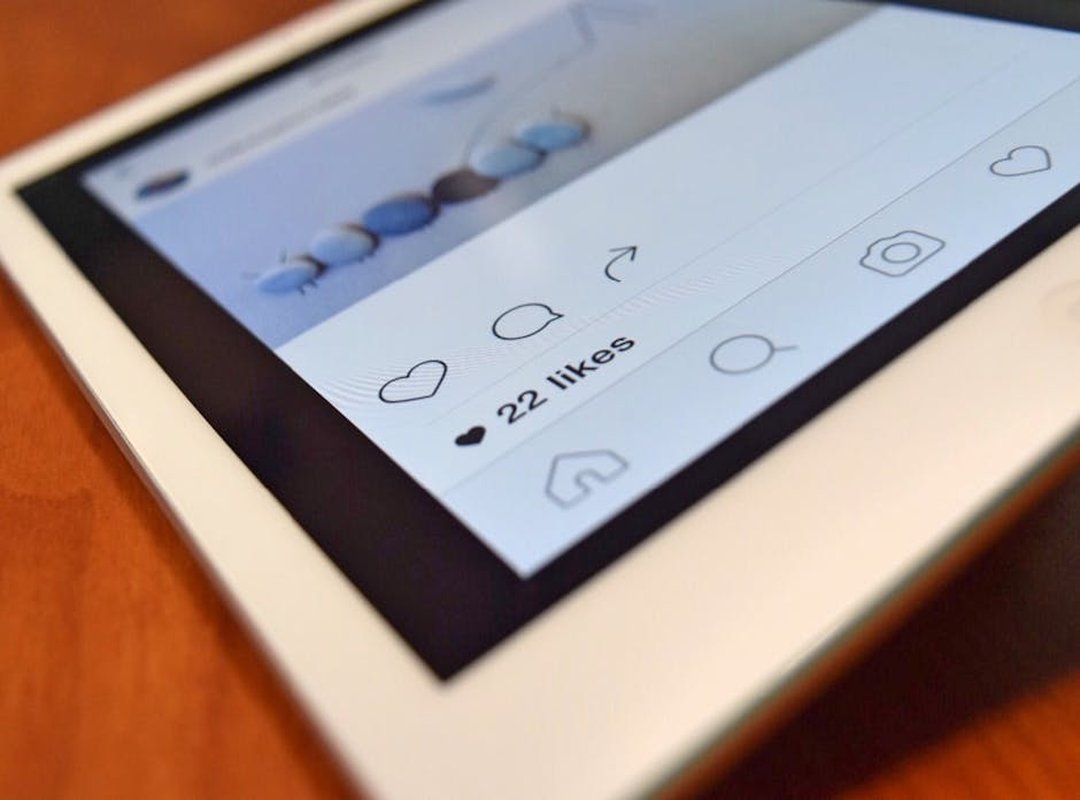
I use these icons. Not all the time. Only when they match.
They’re monoline. Every stroke is exactly 2px. Terminals are rounded.
No variation. That’s good for some things. Terrible for others.
At 16px? They vanish. Tiny details blur.
You lose shape recognition fast. At 96px? They hold up.
But look thin next to bolder sets. Like putting a pencil sketch beside a Sharpie drawing.
They work in minimalist SaaS dashboards. Clean lines, lots of white space, no visual noise.
They work in educational app toolbars. Students don’t need flair (they) need clarity. These deliver that.
They work on nonprofit campaign landing pages. Simple, sincere, uncluttered. No distractions from the message.
But skip them in dark-mode-heavy interfaces. No fill variants means low contrast. Your users will squint.
Skip them in accessibility-focused apps. You need outlined and filled versions for state changes. These give you one version and call it done.
Skip them if your brand demands custom stroke-end caps. These cap everything the same way. No exceptions.
(Which is fine (until) it’s not.)
Try this test: overlay one Flpsymbolcity icon against Google Material Icons and Heroicons. Look at alignment. Spacing.
Optical weight. You’ll see mismatches instantly.
You want options? Check the Emblem Listings Flpsymbolcity page. It shows real pairings.
Not mockups.
Flpsymbolcity Free Symbols by Freelogopng are solid. For the right job.
Not every job.
Pick carefully.
Your users will feel the difference.
Flpsymbolcity vs. The Rest. Pick Your Poison
I’ve used all five. Heroicons, Tabler, Phosphor, Feather, and Freelogopng’s premium sets. Not for fun.
For real projects.
Heroicons is clean but rigid. Tabler has too many icons (I) scroll past 80% of them. Phosphor looks slick but the OFL license trips up some legal teams (ask your lawyer, not me).
Feather? Great for 2018. Now it feels like a museum piece.
Flpsymbolcity Free Symbols by Freelogopng stands out because of how it’s built. Not just drawn (grouped.) That flp prefix means something: fluid layout primitives. Navigation icons live together.
Status icons don’t mix with actions. It saves time.
But don’t pretend it’s perfect. Tabler handles RTL better. Phosphor ships more animated variants.
Feather and Heroicons have React/Vue components baked in. Flpsymbolcity doesn’t.
So when do you pick it?
Choose Flpsymbolcity if you need fast, attribution-free icons for rapid prototyping (and) you’re okay building system glue yourself.
You care about semantic consistency over convenience.
You want symbols that mean something, not just look nice.
What format for logo design flpsymbolcity? That’s where things get real. Especially if you’re exporting for print or SVG animation.
Done Wasting Time on Sketchy Icons
I’ve been there. You grab a “free” icon. You drop it in.
Then. License trouble. Or broken SVGs.
Or it just looks wrong next to your other assets.
That’s why I built the three-check audit into this guide.
License scope? Verified. SVG cleanliness?
Scanned. Design-system alignment? Tested.
No more guessing. No more last-minute swaps.
You want icons that work (right) now (not) after three hours of vetting.
Download Flpsymbolcity Free Symbols by Freelogopng. Run the 3-check audit. Drop one set into your next mockup.
Zero sign-up. Zero trial period. Just clean, usable icons.
You came here because you’re tired of friction. This fixes it.
Great design doesn’t require expensive assets. Just the right ones, used correctly.